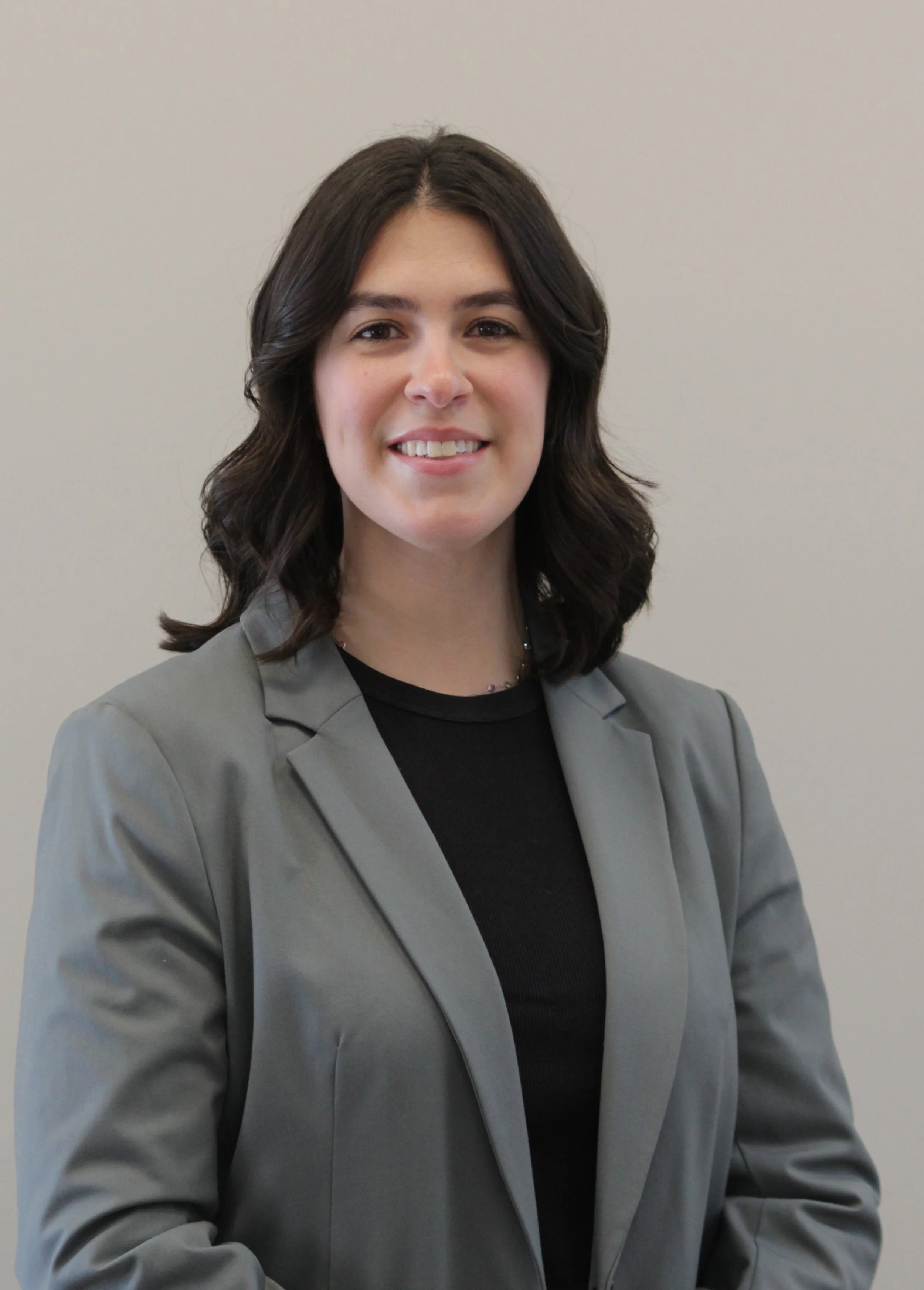
Olivia Dorsey, OTD, OTR/L
Occupational Therapist | Cognitive Behavioral Therapist | Community Rehabilitation Specialist
Olivia Dorsey, OTD, OTR/L, is an experienced occupational therapist and Cognitive Behavioral Therapist at The Supported Living Group (SLG), specializing in community-based practice and interventions that promote autonomy, dignity, independence, and quality of life.
Olivia earned her Doctorate in Occupational Therapy from Tufts University and previously earned a bachelor's degree in psychology and sociology from the College of the Holy Cross. Her professional experience spans community-based mental health, transitional housing, shelter services, adaptive sports, and home care.
Her work at SLG focuses on helping individuals develop practical strategies for successful participation in everyday life, including:
Emotional regulation
Community mobility
Community integration
Activities of Daily Living (ADLs)
Instrumental Activities of Daily Living (IADLs)
Leisure participation
Social participation
Independent functioning
Occupational Therapy Focused on Real-World Independence
Occupational therapy is particularly valuable in community-based disability services because it focuses on how individuals function within the environments where they actually live, work, learn, and participate.
For individuals with brain injury, autism, mental-health conditions, or other disabilities, challenges may involve:
Managing daily routines
Organizing activities
Navigating community environments
Regulating emotions
Maintaining social participation
Managing household responsibilities
Accessing meaningful recreation
Olivia's community-based background allows her to approach these challenges from a functional perspective.
The goal is not simply to improve performance in a clinical setting.
The goal is to help individuals successfully apply skills in everyday life.
Community-Based Practice and Mental Health
A significant component of Olivia's professional experience has involved community-based mental health, including work with unhoused individuals in New York City. She has also worked within shelter systems, transitional housing, adaptive sports, and home-care environments.
This experience provides a valuable understanding of how environmental factors influence:
Independence
Emotional well-being
Daily functioning
Community participation
Access to meaningful activities
Community-based rehabilitation requires understanding the environment as well as the individual.
Sometimes the most effective intervention is not simply teaching someone a new skill—it is modifying the environment, routine, or approach so that the individual has a better opportunity to succeed.
Occupational Therapy and the Connecticut ABI Waiver
Individuals living with acquired or traumatic brain injury may experience difficulties involving:
Executive functioning
Emotional regulation
Community mobility
Organization
Daily routines
Social participation
Safety awareness
ADLs and IADLs
Olivia's occupational therapy background provides an important functional perspective within SLG's Connecticut ABI Waiver service model.
Her work can help connect cognitive and emotional challenges with the practical activities individuals need to complete in their homes and communities.
This complements SLG's broader ABI rehabilitation approach, which emphasizes helping individuals translate rehabilitation gains into meaningful community participation.
Occupational Therapy and Autism Services
Occupational therapy can also contribute significantly to community-based autism services.
Autistic individuals may experience differences involving:
Sensory processing
Emotional regulation
Adaptive functioning
Daily routines
Community navigation
Social participation
Executive functioning
Support should be individualized based on the person's strengths, needs, communication style, and goals.
Olivia's experience in community practice creates a valuable connection to SLG's growing Connecticut ASD Knowledge Center and autism support services.
Emotional Regulation and Functional Participation
Olivia's current SLG role specifically emphasizes emotional regulation as one of the areas addressed through her work.
Emotional regulation is closely connected to occupational performance.
When someone becomes overwhelmed, anxious, frustrated, or emotionally dysregulated, they may have greater difficulty:
Completing daily routines
Participating socially
Navigating the community
Managing responsibilities
Engaging in meaningful activities
Occupational therapy can help individuals identify strategies that make environments and routines more manageable while building skills for greater independence.
Community Mobility and Community Integration
Community mobility is an important component of independence.
Being able to access the community allows individuals to:
Attend appointments
Access employment
Participate in education
Maintain relationships
Shop independently
Engage in recreation
Participate in community activities
Olivia's focus on community mobility and integration directly supports SLG's broader emphasis on community reintegration and meaningful participation.
This makes her profile particularly well suited for internal connections to SLG's ABI Knowledge Center content on:
Community Reintegration After TBI
Brain Injury and Driving
Returning to College
Supported Employment
Housing After Brain Injury
Supporting ADLs and IADLs
Occupational therapy frequently addresses the distinction between Activities of Daily Living (ADLs) and Instrumental Activities of Daily Living (IADLs).
ADLs can include:
Dressing
Bathing
Grooming
Eating
Functional mobility
IADLs can include:
Meal preparation
Shopping
Household management
Transportation
Medication management
Financial responsibilities
Community navigation
For individuals transitioning toward greater independence, difficulties with IADLs can often be more significant than physical limitations.
Olivia's focus on ADLs and IADLs allows SLG to address the practical skills required for successful community living.
Social Participation, Leisure, and Quality of Life
Recovery and independence are not limited to completing responsibilities.
A meaningful life also includes:
Friendships
Recreation
Hobbies
Creative activities
Exercise
Community events
Personal interests
Olivia's professional focus includes leisure and social participation, reflecting SLG's broader belief that disability services should help individuals build lives that are meaningful—not simply lives that are safe.
This is an especially important distinction for long-term ABI and ASD services.
Environmental Modification and Accessible Communities
Olivia's doctoral work at Tufts University included mentoring and research focused on environmental modifications to reduce incident reports in a community-based mental health setting. She also developed an interactive database of mindfulness resources during her doctoral capstone and published research on green space and mental well-being.
These experiences reinforce an important principle of occupational therapy:
Sometimes changing the environment can be just as important as changing the individual.
Environmental modifications may involve:
Reducing distractions
Improving organization
Modifying routines
Creating predictable environments
Improving accessibility
Identifying appropriate community resources
This perspective is highly relevant to community-based disability rehabilitation.
Mindfulness, Well-Being, and Community Participation
Olivia's doctoral work also included development of an interactive mindfulness resource database for students and teachers, along with research concerning the relationship between green space and mental well-being.
These interests complement SLG's broader focus on:
Emotional wellness
Community participation
Meaningful activity
Quality of life
Strength-based support
They also provide opportunities to incorporate wellness-oriented strategies into individualized community support when clinically appropriate.
Mentoring the Next Generation of Occupational Therapists
Olivia currently serves as a doctoral capstone mentor for Tufts University occupational therapy students, with mentoring projects focused on environmental modifications within community-based mental health.
This creates an important academic and professional authority signal for her profile.
It demonstrates that Olivia's work extends beyond direct service delivery into:
Professional education
Clinical mentorship
Program development
Applied occupational therapy research
That is valuable content for an E-E-A-T-focused professional profile.
A Person-Centered Approach to Occupational Therapy
Olivia's current profile emphasizes her commitment to:
Autonomy
Dignity
Independence
Quality of life
Person-centered care
Creative intervention strategies
These values closely align with SLG's overall philosophy.
For community-based services, person-centered occupational therapy means asking:
What does independence mean to this individual?
The answer may be different for every person.
For one individual, it may mean living independently.
For another, it may mean returning to work.
For another, it may mean developing transportation skills, managing a household, reconnecting socially, or participating in a favorite activity.
Olivia Dorsey and SLG's Multidisciplinary Clinical Model
Olivia is part of SLG's broader multidisciplinary team, which combines expertise in:
Neuropsychology
Occupational therapy
Behavior analysis
Counseling
Brain injury rehabilitation
Autism support
Community-based disability services
Her occupational therapy background adds an important functional and environmental perspective to the organization's clinical model.
The relationship can be understood as:
Clinical assessment → Functional strategy → Environmental support → Community participation → Greater independence
Olivia Dorsey and the Connecticut ABI Knowledge Center
Olivia's expertise directly supports several core topics within the Connecticut ABI Knowledge Center, including:
Brain Injury Executive Dysfunction
Community Reintegration After TBI
Brain Injury and Driving
Housing After Brain Injury
Supported Employment After Brain Injury
Returning to College After Brain Injury
Brain Injury and Relationships
Her occupational therapy perspective is especially relevant because these topics ultimately involve one central question:
How can an individual with a disability participate successfully in everyday life?
Olivia Dorsey and the Connecticut ASD Knowledge Center
Olivia's community-based occupational therapy experience also supports SLG's emerging Connecticut ASD Knowledge Center.
Her expertise is relevant to articles addressing:
Autism and executive functioning
Autism and emotional regulation
Independent living for autistic adults
Community integration
Sensory and environmental considerations
Autism and social participation
Choosing an autism provider
This allows SLG's ASD content to demonstrate clinical depth rather than relying solely on generic autism-service language.