CONNECTICUT ACQUIRED BRAIN INJURY WAIVER SERVICES
Your Life. Your Goals. Your Possibilities.
Individualized brain injury support services that help you build independence, develop skills, and create meaningful opportunities in your home and community.
The Supported Living Group (SLG) provides individualized, community-based services for adults participating in Connecticut's Acquired Brain Injury (ABI) Waiver programs. Our approach recognizes that life after a brain injury can involve challenges that extend well beyond the initial period of medical rehabilitation.
Changes in memory, executive functioning, organization, communication, emotional regulation, physical functioning, and cognitive endurance can affect everyday responsibilities, relationships, employment, and community participation.
Our goal is to help individuals address these challenges through practical, person-centered services that build on their existing strengths, recognize their individual needs, and support their personal goals.
Whether you are working toward greater independence at home, developing everyday living skills, returning to employment, or reconnecting with your community, SLG works alongside you to explore what is possible.
Already approved for the ABI Waiver? We welcome the opportunity to discuss your goals and help you explore the next steps.
ALREADY APPROVED FOR CONNECTICUT'S ABI WAIVER?
Let's help you take the next step.
Being approved for the ABI Waiver is an important milestone. Now comes the process of identifying the services and providers that can help you put your individualized service plan into action.
At SLG, we welcome conversations with individuals who have been approved for ABI Waiver I or II and are looking for a provider to help address their authorized support needs.
Whether you are new to the program or already receiving services, our team can discuss your circumstances, explain our service options, and explore whether SLG may be an appropriate provider.
How to get started
1. Contact our team.
Tell us where you live, which ABI Waiver program you participate in, and what types of support you are looking for.
2. Discuss your goals and support needs.
We will arrange an initial conversation to learn more about your circumstances, personal goals, current services, and the areas where you would like additional assistance.
3. Coordinate with your ABI Waiver care manager.
With your permission, we can communicate with your care manager to discuss your approved service plan, the services you are seeking, and the steps necessary to establish SLG as a provider.
4. Review service and staffing availability.
We will discuss whether SLG can provide the services you need in your area and explore potential staffing and scheduling arrangements.
5. Establish a service start plan.
Once the necessary service-plan arrangements, authorizations, and staffing are in place, we can coordinate a start date and begin working toward your goals.
You do not need to have every detail figured out before contacting us. We can help you understand the questions to ask and the information needed to explore your options.

CONSIDERING A CHANGE IN YOUR ABI WAIVER PROVIDER?
You have a choice in who provides your services.
Your needs, circumstances, and personal goals can change over time. You may find that your current provider is no longer the right fit, that your service needs have evolved, or that you would prefer a different approach to supporting your independence.
If you are considering changing provider agencies, SLG welcomes the opportunity to speak with you.
We believe that participants should feel comfortable with the people providing their services, have a voice in how those services are delivered, and feel that their personal goals are being taken seriously.
How to explore a provider change
1. Speak with your ABI Waiver care manager.
Let your care manager know that you are considering a different provider. You can discuss your concerns, explore available agency options, and review the services currently included in your plan.
2. Contact SLG.
We can learn more about your current support arrangements, what you would like to change, and the services you are interested in receiving.
3. Explore whether SLG is the right fit.
We will discuss our service approach, staffing considerations, service availability, and the types of support we may be able to provide.
4. Coordinate the transition.
If you decide to move forward, the provider change and any necessary service-plan updates or authorizations must be coordinated with your ABI Waiver care manager.
5. Agree on a transition date.
We will work with you and your care manager to establish the appropriate arrangements for beginning services and minimizing unnecessary interruptions to your existing supports.
Changing agencies does not have to be an adversarial experience. Our intention is to make the transition as organized and respectful as possible.
HOW SLG CAN HELP: ABI WAIVER SERVICES
The effects of acquired brain injury are different for everyone. Some individuals may need assistance rebuilding everyday living skills, while others may benefit from support applying rehabilitation strategies, returning to employment, or managing the cognitive demands of independent living.
SLG offers a range of services intended to address these different needs. The services available to each individual depend on their applicable waiver, approved service plan, provider qualifications, and service availability.

Find Out If Services Are Available in Your Town
Wondering whether SLG can provide support where you live?
Tell us your town and the type of support you are looking for. Our team will follow up to discuss service options and confirm current staffing availability.
There is no need to travel to one of our offices to start the conversation.
Service availability and start dates depend on individual needs, service eligibility, staffing, and program-specific requirements.
Serving Individuals and Families Throughout Connecticut
Support Where You Live. Opportunities Where You Belong.
The Supported Living Group (SLG) is proud to provide services throughout Connecticut. With the ability to support individuals in all 169 Connecticut towns, we work to make personalized support accessible wherever you call home.
Whether you live in a city, a suburban community, or a more rural part of Connecticut, our team can work with you and your family to explore services that meet your individual needs.
Our Connecticut Locations
SLG has three physical office locations serving communities throughout Connecticut:
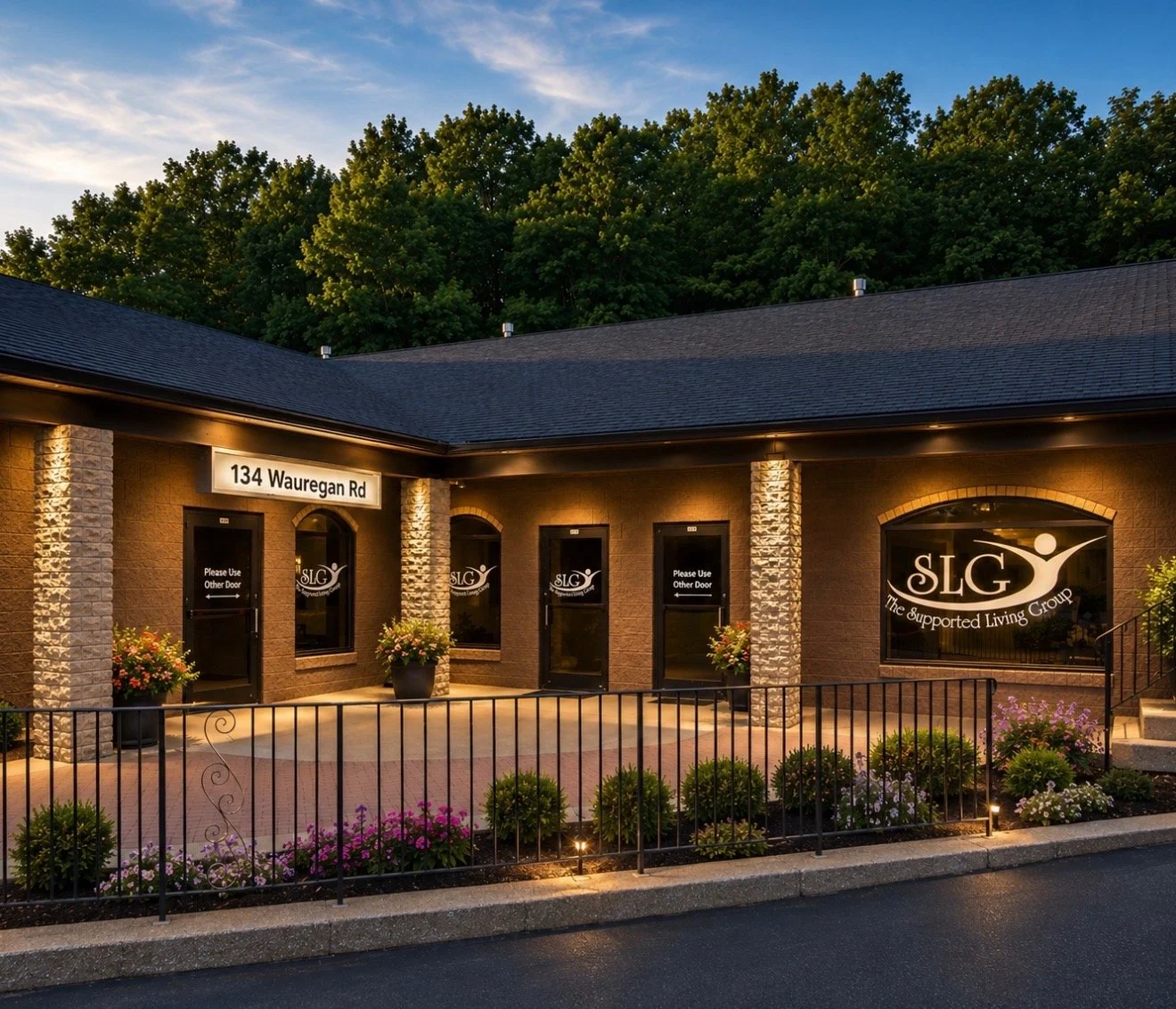
Danielson: 134 Wauregan Road, Danielson, CT
Avon: 147 Simsbury Road, Avon, CT
Bethany: 23 Route 63, Bethany, CT
Our services extend beyond these office locations. Depending on individual needs and staffing arrangements, support can be provided in your home and in appropriate community settings.
We Serve All 169 Connecticut Towns
You don't have to live near one of our offices to inquire about services.
SLG has the ability to provide services across Connecticut, including communities in Fairfield County, Hartford County, Litchfield County, Middlesex County, New Haven County, New London County, Tolland County, and Windham County.
Our team will work with you to understand your location, the services you are seeking, and current staffing availability.
Serving Communities Throughout Connecticut
The Supported Living Group (SLG) is proud to provide services throughout Connecticut. With the ability to serve individuals in all 169 Connecticut towns, our team works to make personalized support accessible in communities across the state.
Our service area includes the following counties and communities:
Fairfield County
Danbury | Stamford | Norwalk | Fairfield
Hartford County
Avon | Hartford | Manchester | Bristol
Litchfield County
Torrington | New Milford | Litchfield
Middlesex County
Middletown | Cromwell | Durham
New Haven County
Bethany | New Haven | Waterbury
New London County
Norwich | Groton | New London
Tolland County
Vernon | Stafford | Tolland
Windham County
Danielson | Putnam | Windham
Don't See Your Town Listed?
SLG has the ability to provide services throughout Connecticut, including communities beyond those highlighted above.
You do not need to live near one of our office locations to inquire about support. Contact our team to discuss your location, individual needs, and the services you are seeking.
Service availability is based on individual needs, program eligibility, and current staffing arrangements.
Learn more about the ABI Waiver




“All of these wonderful people far surpass all of the other agencies he has ever had since going out into the ABI community in 2012. SLG has supported him through countless very serious matters like (1) Being evicted from his apartment and also finding a replacement two-bedroom apartment for live-in help when it was almost impossible to find relocation due to Covid. ” -Rose K

Developing the skills and confidence to live more independently.
Independent Living Skills Training focuses on helping individuals develop, strengthen, and maintain the practical skills needed to manage everyday life.
Following a brain injury, difficulties with memory, planning, organization, initiation, problem-solving, and cognitive endurance can make familiar activities more challenging. ILST provides opportunities to develop strategies and practice skills within the environments where they are needed.
Depending on an individual's goals and approved service plan, training may address:
Establishing and maintaining daily routines.
Household organization and home management.
Meal planning and food preparation.
Budgeting and money management.
Memory strategies and executive functioning.
Time management and task completion.
Medication-management strategies.
Community mobility and transportation skills.
Communication, decision-making, and self-advocacy.
Our approach emphasizes teaching and skill development rather than simply completing tasks for the individual. The objective is to help participants develop strategies they can continue using with greater confidence and independence.
Independent Living Skills Training (ILST)
Our philosophy is centered on helping participants develop sustainable strategies that increase independence over time. Through individualized coaching, practical skill development, repetition, and community-based rehabilitation, SLG's ILST services empower participants to overcome everyday challenges, pursue meaningful personal goals, and build lives defined by greater confidence, choice, and community participation.

ABI Recovery Assistant Services
Turning rehabilitation strategies into everyday progress.
Recovery Assistant services help individuals apply and reinforce rehabilitation strategies in their homes and communities.
Formal rehabilitation may establish important skills and strategies, but applying them consistently in everyday situations can remain difficult. Memory changes, reduced initiation, cognitive fatigue, emotional regulation, and executive functioning challenges can all affect an individual's ability to follow through with daily responsibilities.
Recovery Assistants work alongside participants to reinforce established goals and encourage the use of practical strategies in real-life situations.
Depending on the approved service plan, support may include:
Reinforcing therapeutic and rehabilitation goals.
Developing and maintaining daily routines.
Practicing organizational and executive functioning strategies.
Supporting communication and problem-solving.
Encouraging self-advocacy and independent decision-making.
Reinforcing community participation and everyday living skills.
Supporting the development of natural support networks.
The focus is on helping participants build confidence, apply what they have learned, and make meaningful progress toward their personal goals.

Pre-Vocational & Employment Readiness Services
Building the skills and confidence to move toward employment.
Returning to work following a brain injury can involve more than finding an available position. Individuals may need to rebuild confidence, strengthen executive functioning, develop workplace routines, and identify strategies for managing the cognitive and interpersonal demands of employment.
SLG's pre-vocational services focus on developing transferable skills that can help prepare individuals for future paid or unpaid employment.
Depending on the participant's goals and approved service plan, activities may include:
Career exploration and vocational planning.
Developing workplace routines and expectations.
Time management and task completion.
Workplace communication.
Problem-solving and flexible thinking.
Self-advocacy and accommodation awareness.
Building confidence through structured learning and practical experiences.
A central part of SLG's vocational approach is Inspire Arts CT, our creative arts and vocational initiative. Through activities involving visual arts, woodworking, horticulture, and other creative projects, participants have opportunities to practice planning, organization, task persistence, communication, and collaboration.
These experiences can help individuals identify strengths, develop transferable skills, and explore potential vocational interests.

A cornerstone of SLG's vocational rehabilitation approach is Inspire Arts CT, our creative arts and vocational initiative that provides individuals living with acquired brain injuries meaningful opportunities to develop workplace skills while exploring creativity, self-expression, and personal growth. Through professionally supported visual arts, woodworking, horticulture, mixed media, and community-based creative projects, participants strengthen executive functioning, communication, planning, organization, task persistence, and collaboration in environments designed to promote both rehabilitation and vocational development.
Unlike traditional vocational programs, Inspire Arts CT recognizes that recovery and employment readiness often develop together. Creative projects encourage participants to practice attention to detail, problem-solving, following multi-step processes, meeting expectations, and developing confidence—all transferable skills that support future employment and greater community participation. Participants also have opportunities to showcase their work through exhibitions, collaborative community projects, and vocational experiences that reinforce achievement and self-esteem.
SLG believes successful employment begins long before someone submits a job application. By combining individualized pre-vocational coaching with innovative programs such as Inspire Arts CT, we help participants discover their strengths, build practical employment skills, and move toward meaningful, sustainable careers that reflect their interests, abilities, and long-term goals
“Life’s most persistent and urgent question is, what are you doing for others’”
— Dr. Martin Luther King Jr., clergyman, & civil rights activist
Our multidisciplinary team also collaborates with the Connecticut Bureau of Rehabilitation Services (BRS), healthcare providers, families, and other members of each participant's support network whenever appropriate. This coordinated, person-centered approach helps ensure employment goals remain aligned with the individual's rehabilitation, educational, and long-term life objectives.
Whether someone is preparing for their first job after a brain injury, returning to the workforce, changing careers, or exploring employment for the first time, SLG's Supported Employment Services are designed to help individuals build meaningful careers while increasing independence, confidence, financial stability, and participation within their communities.
Helping individuals pursue meaningful and sustainable employment.
For individuals who are ready to pursue competitive employment, SLG's Supported Employment services focus on identifying opportunities that reflect personal interests, abilities, experience, and career goals.
We recognize that the transition back into employment following a brain injury can present challenges involving memory, organization, processing speed, communication, confidence, transportation, and workplace expectations.
Our employment support may include:
Vocational assessment and career exploration.
Identifying employment interests and transferable skills.
Resume and application development.
Interview preparation.
Job search assistance.
Workplace communication and problem-solving strategies.
Accommodation planning and self-advocacy.
Employer coordination, where appropriate.
On-the-job coaching and employment stabilization.
Strategies to support long-term employment retention.
Our goal is not simply to help someone obtain a job, but to identify an employment opportunity that offers a realistic and sustainable pathway toward greater independence.
Supported Employment Services
“Before he became part of this program, Mark was becoming a recluse, even to his family. His first few weeks in the program were tough for both of us. Change is hard for him, but he persevered and after seeing the different styles of art, he could do, he looked forward to going. He was more engaged in conversation about each of his daily activities and he has even tried to get me to do some of the painting he has been shown. Mark’s participation takes time and effort but is well worth it leading to his independence. My fear for his future is slowly dissipating as he progresses forward. ”

Personal Care Assistant (PCA) Services
Respectful assistance with everyday personal care needs.
Some individuals experience physical, cognitive, or behavioral changes following a brain injury that affect their ability to complete personal care activities independently.
Where PCA services are available under the applicable waiver and included in the participant's authorized service plan, SLG can discuss assistance with activities such as:
Bathing and showering.
Dressing and personal hygiene.
Eating-related assistance.
Toileting and personal care routines.
Mobility and safety assistance.
Other approved activities of daily living.
Our approach emphasizes dignity, personal choice, and participation wherever possible. Assistance is provided in accordance with the individual's approved service plan and identified needs.
Please contact us to confirm PCA availability under your specific waiver program.
Additional Community-Based Services
Companion Services
When included in an individual's approved service plan, Companion Services may provide non-medical supervision and socialization, along with certain specified household supports. These services are intended to support an identified therapeutic goal and do not replace hands-on personal care.
Group Day Support
Group Day Support may be available for participants whose approved plans identify appropriate group-based opportunities for skill development, social participation, or meaningful activities. Contact SLG to discuss current offerings and availability.

OUR APPROACH TO BRAIN INJURY SUPPORT
Understanding the individual behind the injury.
No two people experience brain injury in the same way. Even when individuals share a diagnosis, their abilities, challenges, interests, and goals can be very different.
Effective support begins with understanding the individual and recognizing how the effects of brain injury influence everyday life.
SLG's approach emphasizes:
Individualized planning
Services should reflect the individual's own priorities, abilities, circumstances, and approved goals.
Practical skill development
Rehabilitation strategies are most meaningful when individuals can apply them in their homes, workplaces, and communities.
Consistency and communication
Developing productive relationships requires clear expectations, reliable communication, and coordination among the people involved in an individual's support.
Independence and self-direction
We encourage participants to take an active role in their services and work toward the greatest level of independence appropriate to their circumstances.
Community participation
A meaningful life involves more than completing daily responsibilities. It also includes relationships, interests, employment, recreation, and opportunities to participate in the wider community.
WHO WILL BE WORKING WITH ME?
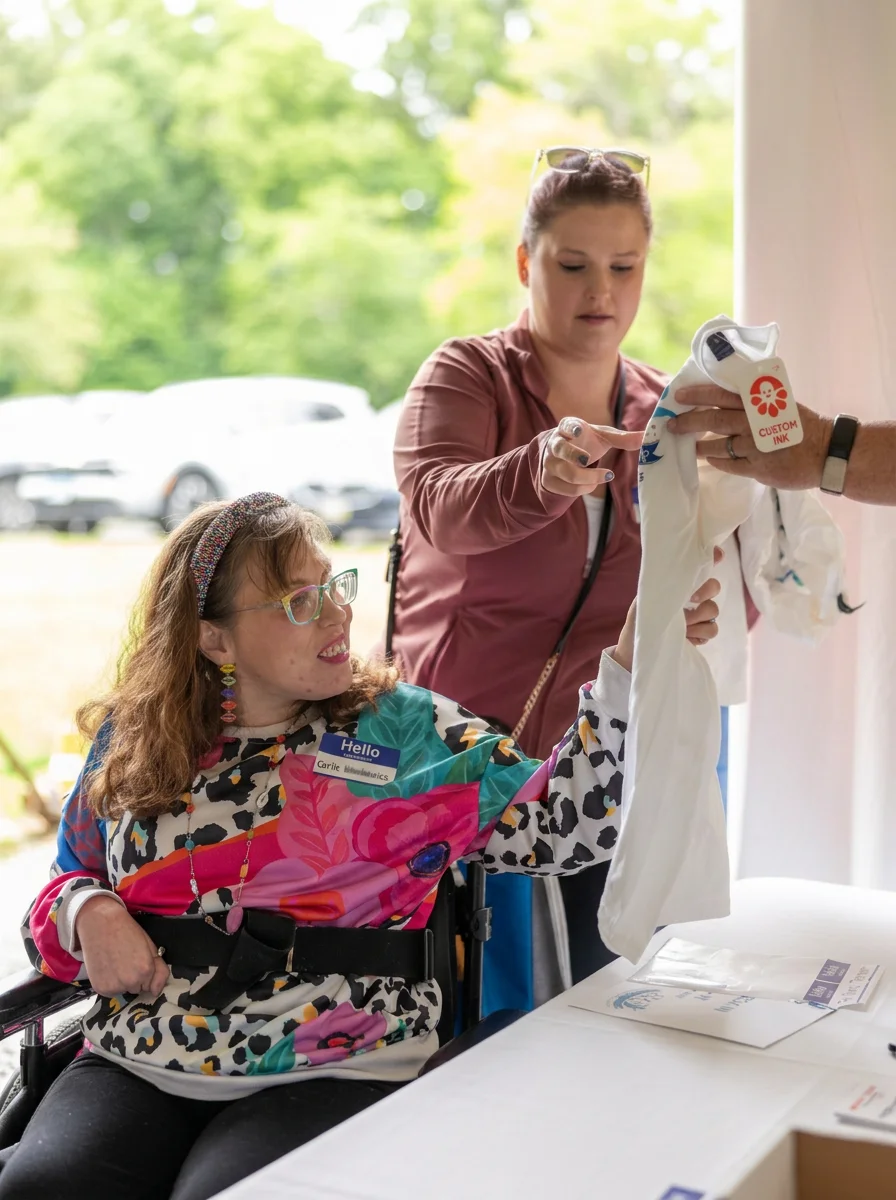
Choosing a service provider is also about choosing the people who will be involved in your everyday life.
Before services begin, we want to understand your preferences, communication style, goals, routines, and the types of support that work best for you.
We encourage prospective participants and families to ask questions about:
The qualifications and relevant experience of staff providing the requested service.
Training and supervision.
How staff assignments are determined.
Scheduling and communication expectations.
Who to contact with questions or concerns.
How service progress and changing needs are reviewed.
Staffing arrangements and availability depend on the service requested, geographic location, and current agency capacity. These considerations will be discussed before a service start date is established.
WHERE DOES SLG PROVIDE ABI WAIVER SERVICES?
Connecticut-based services with a community focus.
SLG maintains office locations in:
Danielson
134 Wauregan Road
Danielson, CT 06239
Avon
147 Simsbury Road
Avon, CT 06001
Bethany
23 Route 63
Bethany, CT 06524
Many ABI Waiver services take place in the participant's home or appropriate community settings. Our office locations provide administrative and operational bases, but they do not necessarily determine whether a particular service is available in a specific town.
Staffing availability can vary depending on location, service type, schedule, and individual support needs.
Contact us with your town or ZIP code so we can discuss whether SLG may be able to provide services in your area.
FREQUENTLY ASKED QUESTIONS
-
No new waiver application is required simply because you are contacting a different provider. Your existing waiver enrollment and authorized service plan should be discussed with your care manager as you explore provider options. Any changes to services or providers must follow the applicable planning and authorization process.
-
ABI Waiver participants have a role in selecting qualified providers for services included in their person-centered service plan. You can discuss your provider preferences with your care manager and explore whether SLG is an appropriate option.
-
You can explore other qualified provider options. We recommend speaking with your care manager and contacting SLG to discuss your concerns, requested services, and potential transition arrangements.
-
That depends on the services included in your approved plan, the applicable waiver requirements, SLG's provider qualifications, and current staffing availability. We can discuss the services you are looking for and identify which options may be appropriate.
-
There is no single timeframe that applies to every participant. Timing depends on service authorization, any necessary plan updates, staffing availability, and coordination with your care manager. We will discuss these considerations during the initial conversation.
-
It can be helpful to have your current service information available, but you do not need to have everything prepared before contacting us. We can explain what information will be needed as the process moves forward.
-
Yes. Family members or other individuals you choose may participate in discussions and planning, consistent with your preferences, decision-making arrangements, and applicable privacy requirements.
-
No. The services available to an individual depend on the applicable waiver, the approved service plan, provider qualifications, and required authorizations. Some clinical or other services may involve separate eligibility, funding, or payment arrangements. Our team can discuss these distinctions with you.
LET'S TALK ABOUT YOUR GOALS.
Your next step can begin with a conversation.
Whether you have recently been approved for the ABI Waiver, are looking for a new service provider, or want to explore how additional supports may help you move forward, SLG welcomes the opportunity to speak with you.
Tell us where you live, what services you are looking for, and what you hope to achieve. We will work with you to explore whether our programs and current service availability may be a good fit.
Your Life. Your Goals. Your Possibilities.
The Supported Living Group
134 Wauregan Road, Danielson, CT 06239
147 Simsbury Road, Avon, CT 06001
23 Route 63, Bethany, CT 06524
Phone: (860) 774-3400
Email: info@slg-ct.com


